The Coastal Zone Task Force is a group focused on revitalization efforts and supported by the Delaware County Planning Department.

The Delaware County Coastal Zone Task Force (CZTF), formed in 1995, is a group of representatives from various branches of Delaware County government, Coastal Zone municipalities, business, industrial, environmental, transportation, and citizen bodies. Task Force members include, but are not limited to, municipal officials; environmental organizations; businesses; and County and regional organizations such as the Delaware County Conservation District, the Delaware Valley Regional Planning Commission, and the Delaware County Transportation Management Association. The group meets quarterly each year to guide Delaware riverfront redevelopment activities, collaborate on projects, and share important information pertaining to the coastal zone. The CZTF aims to promote the redevelopment of the waterfront with a regional perspective by fostering cooperation and coordination among coastal zone communities. This initiative has been designed to help communities make the best use of this limited waterfront and plan for the coastal zone’s future land use.
Meetings are held quarterly, and attendance is open to the public. Should you be interested in participating, kindly refer to the event calendar to confirm the next scheduled meeting.
Questions about the Coastal Zone Task Force? Contact the Planning Department at 610-891-5200 or Planning_Department@co.delaware.pa.us.
THE COASTAL ZONE MANAGEMENT PROGRAM
The National Coastal Zone Management Program (CZMP) is an important federal-state partnership aimed at safeguarding and promoting the responsible development of our coastal communities and resources. This program is designed to balance the sometimes competing needs of coastal resource use, economic development, and conservation. Common eligible projects include research, acquisition and easements, design, construction, and education.
The Coastal Zone Management Program tackles a range of important issues. These include preparing for and adapting to climate change and its impacts, ensuring that energy facilities are constructed in ways that protect our national interests in energy production and coastal resources, and minimizing conflicts with other coastal uses. One of the key goals of the program is to provide public access to coastal areas. This involves creating new access opportunities and enhancing existing sites, as well as providing public education and outreach to ensure that people know where and how they can access the coast. Another important aspect of the program is habitat protection. This is achieved through land-use planning, habitat restoration, and state and local permitting programs that regulate development impacts to coastal habitats. Finally, the program also aims to address nonpoint source pollution, which is the biggest threat to our coastal water quality today. This type of pollution can come from runoff from streets or lawns, and addressing it is critical to ensuring the health of our coastal ecosystems.
The coastal zone along the Delaware River Estuary extends inland to 660 feet in urbanized areas, to 3.5 miles in rural areas, and includes floodplains of the Delaware and Schuylkill Rivers and their tributaries to the upper limit of tidal influence, and tidal and freshwater wetlands. The Coastal Zone Boundary, also called the 306 Boundary, is the main management area. The Coastal Nonpoint Program Boundary, also called the 6217 Boundary, is a larger watershed-based boundary for nonpoint source management activities and planning grants.
View Delaware County’s Coastal Zone Web map to see if your project site is part of the Delaware River Estuary: Delaware County Coastal Zone Web Map.
For additional grant information or to view previously awarded projects, please visit: DEP Coastal Zone Grants (pa.gov).


Delaware County Planning can help you understand how to make your historic building more energy efficient and sustainable while retaining its historic character.
“The greenest building is the one that already exists.” Historic preservation is inherently sustainable and the reuse, adaptation, and upgrading of existing buildings is the most sustainable combination of reducing our carbon footprint. The following resources can help guide projects in historic buildings.
Questions about Sustainability or Historic Preservation? Contact the Planning Department at 610-891-5200 or planning_department@co.delaware.pa.us.
MAINTAINING YOUR HISTORIC HOME A PRACTICAL GUIDE FOR HOMEOWNERS
This guide functions as an instruction manual for the maintenance, repair and preservation of historic homes, and is targeted toward homeowners. The information within is applicable to all historic residential structures, not only those located in Delaware County. The guide is divided into six sections, each of which tackles specific aspects of historic home maintenance. They are: Roofs, Chimneys, and Gutter Systems; Walls and Foundations; Windows and Doors; Porches and Awnings; Landscapes; and Sustainability and Energy Efficiency. The document also outlines the material and structural differences between historic houses and modern houses, and the particular issues that are common to older homes.
NATIONAL PARK SERVICE
In recognition of the role the built environment plays in energy use, Technical Preservation Services develops guidance and technical information about how historic properties can incorporate sustainable practices to reduce energy consumption, while maintaining those characteristics that make historic properties significant.
NATIONAL TRUST FOR HISTORIC PRESERVATION - PRESERVATION LEADERSHIP FORUM
The ‘greenest building’ argument has dominated conversations around sustainability and historic preservation for decades, recognizing that existing buildings are inherently ‘greener’ when compared to demolition and new construction. But in recent years, sustainability has come to mean more than simply being environmentally responsible. Older buildings and blocks are a key component to creating successful cities and neighborhoods – historic fabric creates economically vital, socially equitable, and strong, resilient neighborhoods.
PRESERVATION PRIORITIES TASK FORCE
A partnership of the National Preservation Partners Network and the National Trust for Historic Preservation. Formed in 2020, this two-year project brings together advocates from across the country to help statewide and local organizations address four significant, interrelated issues facing the preservation movement including Sustainability and Climate Action.
PLANPHILLY
A newsletter by WHYY that focuses on planning issues in the Philadelphia region, with articles on Preservation, Sustainability and others.
BUILDING SCIENCE CORPORATION
A building science consulting firm with a wide variety of articles, case studies, guides, training, webinars, etc. on its website. Search all documents for ‘historic’ to find information specific to historic buildings.
GREEN BUILDING ADVISOR
Building Science articles, books, blogs, and Q&A. Primarily about general sustainability and Green rating, but search for ‘historic’ for a list regarding historic buildings.
CARBON AVOIDED RETROFIT ESTIMATOR (CARE)
A tool for calculating and comparing the embodied, operating and avoided carbon impacts and benefits of reusing, upgrading existing buildings vs building new buildings.
SUSTAINABLE TRADITIONAL BUILDINGS ALLIANCE
An alliance of the UK’s leading organizations associated with the conservation and improvement of traditional buildings.
Many external sites have digital copies of maps available for personal use. These are not Delaware County websites, but are provided for information purposes. Please note that municipal boundaries have changed over time. Refer to the municipal genealogy chart for clarification on division dates.
The Delaware County Planning Department has an historic atlas collection available for public viewing at the County Archives and Records Center.
Digital Map Collections
| Collection | Description |
|---|---|
| Delaware County History | This website has a lot of information specific to Delaware County, including maps, tax records, census records, newspaper articles and photos split into municipalities. There are also topic-specific pages such as mills, transportation, covered bridges, WPA and more. |
| Free Library of Philadelphia | While primarily for Philadelphia, the Free Library has many maps that also cover Delaware County. Use the Search tool to find Delaware County. Includes 1809 Hills Map, 1946 maps and directories, Hexamer surveys of industries (mills/factories), Sanborn Fire Insurance Company maps and other maps. |
| Greater Philadelphia GeoHistory Network | Run by the Athenaeum of Philadelphia, it has a large number of maps in the Philadelphia area, including an interactive maps viewer of some maps geo-located to the current street grid. Use the Resource Browser to search by county or keyword. Some local historical societies have their collections on this website. |
| Historic Map Works | A historic digital map database of North America and the world. Includes a lot of special maps like birdseye views, nautical charts and antiquarian maps. Some maps are name-searchable, which is useful for genealogy purposes, but nothing in Delaware County yet. Some maps are available for purchase. |
| Library of Congress | The Digital Collections of the Library of Congress includes HABS/HAER Surveys, City/Town maps (look for PA- Philadelphia Region for Delaware County maps), and many other collections. |
| Lower Merion Historical Society | Primarily for Montgomery County, it also includes antique maps that include Delaware County, and Main Line Atlases, which include Haverford and Radnor Townships in Delaware County through 1961. Use the ‘select page’ at the top of the page to choose. |
| Pennsylvania Historical & Museum Commission (PHMC) | The State Archives has an extensive collection of materials, including maps. The collection includes the 1816 Melish County map, 1850s-1870s County maps, copied Penn grant surveys, transportation maps, and more! Some information for Delaware County may be included in Chester County (pre 1789) so check both. The site also includes other map sites. |
| Penn State Sanborn Fire Insurance Maps | Sanborn Fire Insurance Company did detailed surveys of some areas 1884-1930, particularly the heavily populated areas in the south and east of the county. The list is organized by town (sometimes municipality) but also there is a Delaware County list and an interactive Delaware County Index map. |
Aerial Maps
Delaware County Aerial Imagery Viewer- Available 2000-2025.
Historic Aerials- Available 1950s-2020, you can overlay a current street map and see changes over time.
PASDA - Available 1937-2023. Use the Tile Index to select the dates you want. Images need to be downloaded.
Local Map and Atlas Collections
Several local historical societies have maps and atlases in their collections but are not available online. Check with your local historical society to make an appointment.
Delaware County Historical Society
Delaware County Archives and Records Center (DCPD Collection)
| Maps |
|---|
| 1882 Early Land Grants and Patents (by municipality, showing ownership 1682-1720) by Smith |
| 1862 Map of the Early Settlements (county-wide) by Smith |
| 1683 Delaware County Map by Ashcom |
| 1687 A Mapp of the Improved Part of Pensilvania in America, Divided into Countyes, Townships and Lotts by Holme |
| Early Roads and Trails (drawn in 1990s) |
| 1752 Early map of Springfield by John Morton |
| 1798 Middletown Township (redrawn in 1980s) |
| 1826 Mill Sites of Delaware County (drawn in 1994) |
| 1828 Thomas Leiper’s Railway, 1808-1828 |
| 1848 Map of Delaware County by Ash |
| 1870 Atlas of Delaware County by Hopkins |
| 1875 Map of Delaware County by Lee |
| 1882 Atlas of the Properties along the Philadelphia, Wilmington & Baltimore Railroad |
| 1902 Baist's Atlas of properties in Southwest Suburbs of Philadelphia |
| 1909 Atlas of Delaware County: East of Ridley Creek by A .H. Mueller |
| 1913 Atlas of Delaware County: West of Ridley Creek by A .H. Mueller |
| 1920s with later additions Sanborn Maps of Delaware County |
| 1934 Map of Delaware County West of Crum Creek by Franklin Survey Map Co. |
| 1942 Map of Upper Darby & Vicinity by Franklin Survey Map Co. |
| 1947 Property Atlas of the Main Line, Penna. by Franklin Survey Map Co. |
| 1961 Atlas of the Main Line by Franklin Survey Map Co. |
| 1965-1985 Chester Volume 1 and Chester Volume 2, Sanborn Fire Insurance Company |
Find out about other historical records on our Historic Research Page.
Questions about Historic Maps? Contact the Planning Department at 610-891-5200 or Planning_Department@co.delaware.pa.us.
To make an appointment to view the historic atlas collection, contact the Archives and Records Center at 610-891-5620 or archives@co.delaware.pa.us.

The Planning Department provides preservation planning services to maintain the historic integrity of Delaware County communities.
Delaware County’s Historic Preservation Planners use strategic planning tools to protect the County’s historic, cultural, and archaeological resources. These efforts help enhance the character of our communities and generate economic vitality. The Planning Department also provides a wealth of files, survey information, and historical atlases to other agencies and the public at large.
The Planning Department encourages the use of best practice when undertaking work to historic buildings.
The National Park Service has issued a series of Preservation Briefs which provide guidance on preserving, rehabilitating and restoring historic buildings. They help historic building owners recognize and resolve common problems prior to work. The briefs are especially useful to Historic Preservation Tax Incentives Program applicants because they recommend methods and approaches for rehabilitating historic buildings that are consistent with their historic character.
Questions about Preservation Briefs? Contact the Planning Department at 610-891-5200 or Planning_Department@co.delaware.pa.us.
WHAT WE DO
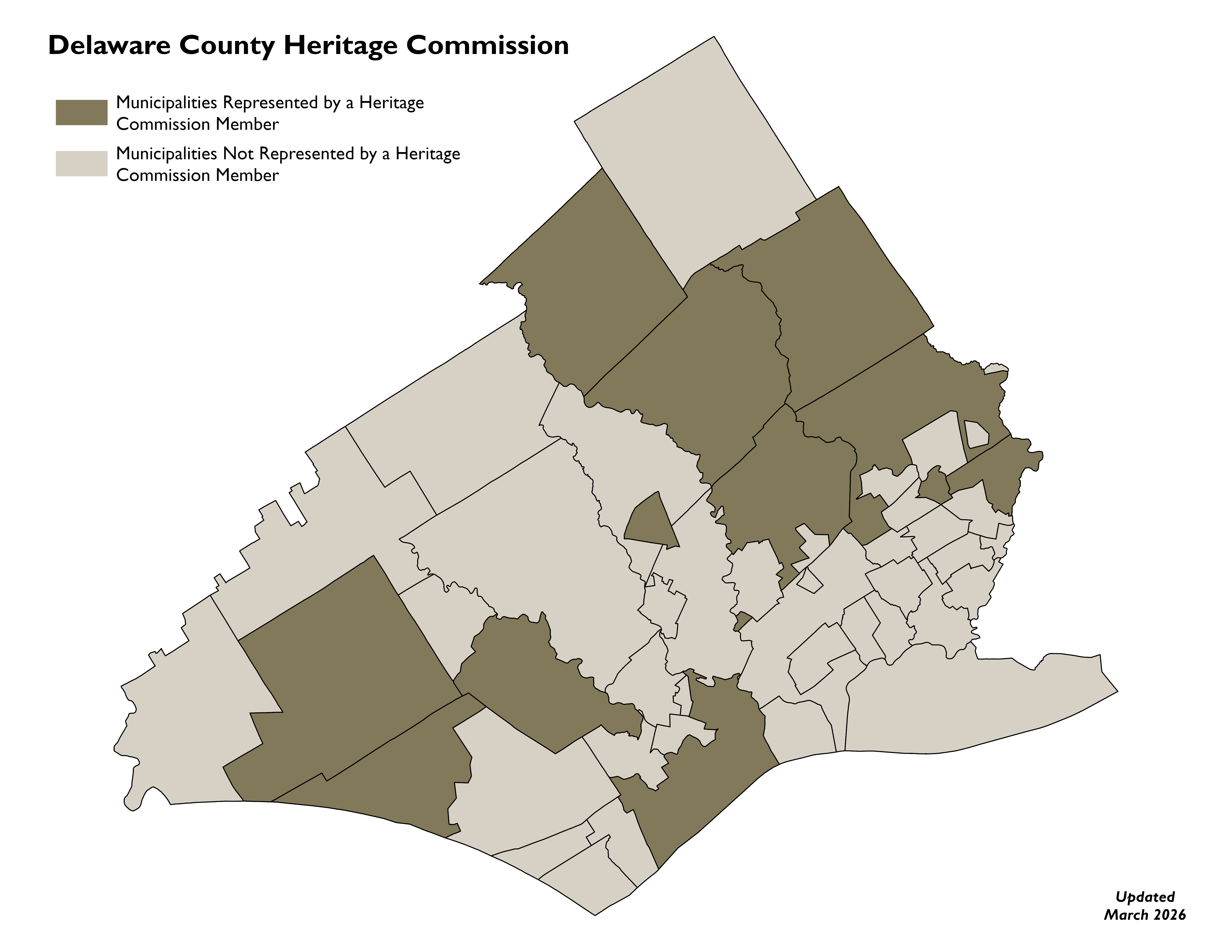
The Delaware County Heritage Commission is made up of 11 residents who are appointed by Delaware County Council to promote the cultural heritage of the county and make recommendations to Council on preservation issues in the County. The Commission fulfills this charge through the following undertakings:
- Hosting Educational Seminars
- Making recommendations on annual Community Development Block Grant funding
- Sponsoring Annual Preservation Awards
- Advising Council on county owned historic resources
- Acting as liaison between County Council and historic organizations in the County
SEMINARS
The Commission seeks to raise heritage awareness and provide education on preservation for citizens of Delaware County by hosting periodic seminars and workshops. Past subjects include restoring and maintaining historic homes, historic landscaping, interpreting and funding historic sites, and preservation strategies. A list of previous seminars can be found here.
Delco Volunteers 250 Workshop
The Workshop was on Wednesday, October 29, 7-9 pm on Zoom
Do you have volunteer opportunities with your group or site?
Do you want to know how to get more involved with your local community for 2026 and beyond?
This interactive workshop showed organizations how to post their opportunities and showed individuals and groups how to search for opportunities.
Hosted by America250PADelco Director Andrea Silva.
Delco Volunteers is a strategic investment to build community and American pride through volunteer service. A250PADelco will launch an interactive web platform and marketing campaign to promote ‘American Generosity and Service’. Community Program Partners will be invited to post 250th volunteer opportunities at their historic and civic sites, commemorative events, and public history projects. A250PADelco will connect with the public, schools, companies, faith centers, and civic groups to mobilize and join the celebration! This project is made possible through a very generous grant from the Philadelphia Funder Collaborative for the Semiquincentennial.
America250PADelco website with more information
ANNUAL PRESERVATION AWARDS
The Heritage Commission traditionally sponsors the Annual Preservation Awards each May during National Preservation Month. Awards are bestowed to those who have contributed to retaining and maintaining our County’s heritage through a construction project, special program or project, planning effort, or publication. Additional awards are granted to an individual, group, or young person who has contributed significantly to our heritage. The Leedom B. Morrison Award recognizes a construction or special project in Chester City. The Legacy Award recognizes a long-term business in a historic resource. A new Semiquincentennial Award honors projects related to America250 that occurs in 2025-2027.
The 2026 Preservation Awards was held in conjunction with the William H. Bates Awards on May 2, 2026 at the Redwood Center in Upland Park. Council Vice Chair Christine Reuther presented a resolution proclaiming May as Preservation Month. Twenty-one award winners were honored with a presentation of their certificates by Heritage Commission Chair Samuel A. Pickard. Congratulations to all award winners!
Watch a video of the awards presentation here
All past award recipients are available in PDF form.
WHO WE ARE
Chair - Sam A. Pickard

Sam Pickard was first appointed to the Heritage Commission in 2021. He was born and raised in the Lawrence Park section of Marple Township and now lives in the St. Albans neighborhood of Newtown Square. He serves as the president of the Marple Historical Society and sits on the board of the 1696 Thomas Massey House. Since 2020, he has researched and authored a blog on Marple Township history. He is a preservation planner in AECOM’s Cultural Resources group, where he works alongside archaeologists and architectural historians. Sam has BA in history from La Salle University, an MS in city & regional planning from Temple University, and a certificate in historic preservation from Bucks County Community College.
Vice Chair - Emma Leuschner

Emma Leuschner grew up across the United States as part of an Air Force family. She is a board member and volunteer at the Concord Township Historical Society and serves on their Research Committee. Emma compiled the National Register nomination for the Pennock E. Sharpless House which was designated in 2024. She maintains several public history websites related to Concord Township. She also volunteers at the American Helicopter Museum and Education Center as part of their Education Committee. Emma lives in Glen Mills with her husband and two little boys.
Secretary - Carla Welsh
Carla Welsh is a self-taught researcher, writer, genealogist, and historian with a passion for uncovering Delaware County’s earliest stories. She has been published in historical journals in New Jersey, and her research is archived in repositories in both Pennsylvania and New Jersey. In 2025, she published The Push of Power: Reexamining the Pennsylvania Witchcraft Trial of Margaret Matson. Her work has earned her a Delaware County Preservation Award, coverage by WHYY, and inclusion in the upcoming documentary For the Common Good: The Women Who Shaped Our Nation. A lifelong resident of the area and a descendant of early New Sweden settlers, she is committed to preserving local history and strengthening community pride.
Robin Craren

Robin has been a resident of Drexel Hill for the past 6 years but moved to the Philadelphia area in 2010. She grew up in New England and moved here to attend graduate school at Temple University for art history. She currently works at the Barnes Foundation where she manages and performs research of its art collection. She has a particular interest in the ownership history of works of art as it shows how a work of art moved through history and place. She has always held an interest in local and cultural history and is interested in engaging with and preserving Delaware County’s history.
Beth McCarrick
Beth McCarrick has been a resident of Delaware County all of her life and has lived in Bethel Township for over 30 years. She is currently the Chairman of the Bethel Township Preservation Society. She and her daughter Faith wrote "Images in America - Bethel Township, Delaware County," for Arcadia Publishing with the help of the Bethel Township Preservation Society. She has also been a presenter at Delaware County Community College's Elder Week focusing on history.
Karen Micka
Karen Micka has been a lover of American and local history since grade school. In high school, history was a favorite subject. She went to the monthly World Affairs Council Meetings in Philadelphia when in high school.
She has never lost her love of history which lead her to be a board member of the Delaware County Historical Society (Chair, co-Vice Chair, Lecture Chair), a board member for close to 20 years with the Friends of the Swedish Cabin, a longtime board member of the Aston Historical Society (President, Vice President, Treasurer and now Recording Sec.), founding member of DCHPN, co-founder of the Western Delaware County Historic Tour group, and a member of the Delaware County Heritage Commission. She loves visiting historical sites and finding out new information about history. “To me, history is very exciting!”
Maura O'Brien
 Maura O’Brien was appointed to the Delaware County Heritage Commission in 2026. Maura was born and raised in the Greater Philadelphia area and lived here her entire life, except for the fourteen years she spent in the US Foreign Service. Working for the US Agency for International Development, she served in Ghana, South Sudan, Morocco, Iraq, and Pakistan. Now Maura lives in Ardmore. She attended the University of Pennsylvania for and Haverford College, where she now works. Maura also volunteers with the Pennsylvania Immigration Coalition.
Twyla Simpkins
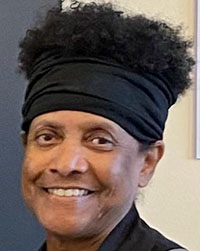
Twyla ‘Ms. T’ Simpkins taught in the Chester Upland School District for 35 years before retiring in 2008 and becoming the Founding Director of the Yes We Can Achievement and Cultural Center (formerly the YWCA Chester), a Chester-based 501(c)3 organization dedicated to the elimination of racism, empowering women and promoting peace, justice, freedom and dignity. She plays an active role in the Chester community, participating in many events as an archivistorian and storyteller. A graduate of the Pennsylvania State University, holding a BS in Secondary English Education, her hobby has become a passion. Nicknamed "Chester's modern-day historian", Ms. T brings to many projects the institutional memory as well as a profound understanding of both the local history of Chester and its place in the larger history of the region and country. She regularly contributes to the humanities-based, community revitalization efforts of Chester Made and the Pennsylvania Humanities Council, assisting with the delivery of local history programming for events as well as her on-going work with students from Widener University, Swarthmore College and other area educational institutions. She also continues to enjoy adding to her extensive black memorabilia collection and completing historical documentaries of 'Precious Places' in the Chester vicinity.
Rev. Alexis Washington

Rev. Alexis L. Washington was appointed to the Delaware County Heritage Commission in 2025. She is the pastor of Campbell African Methodist Episcopal Church in Media, the county’s oldest African American congregation, where she also founded the Campbell Community Center to support youth, families, and neighborhood revitalization. She helped secure a Preserving Black Churches Grant from the National Trust for Historic Preservation to advance the church’s restoration and preservation. She also serves on the Young Friends of the Preservation Alliance of Greater Philadelphia Steering Committee and the Media Archives Commission, working to preserve and share the region’s diverse history. In addition to her preservation work, Rev. Washington is an elementary school counselor in the William Penn School District and a Holmes Scholar pursuing her Doctor of Education in Educational Leadership, Organizational Change, and Policy at Temple University. She serves on the First Episcopal District African Methodist Episcopal Church Women in Ministry Executive Board as Treasurer, the Executive Board of the Media Area NAACP as Chaplain and Chair of Religious Affairs, and is active with the League of Women Voters and the National Congress of Black Women Delaware County Chapter, where she contributes nationally through the Committee on Youth Development.
Kelli Wilson

Kelli was raised in the Germantown/Mt. Airy section of Philadelphia and moved to Yeadon in 2009. She is the Chair of the Yeadon Borough Historical Commission. Since childhood, she has enjoyed visiting historic neighborhoods. More recently, she spends her time enjoying historic lectures and taking courses in Historic Preservation at the University of Pennsylvania.
The Delaware County Planning can help you understand and implement protective regulations for historic resources.
The Planning Department can help you find the right tools to find and preserve historic resources in your community. Each municipality should evaluate their current preservation efforts and consider which of the regulatory tools which best suit your needs.
We’re happy to help you in the process, but the information below includes some background on the most common historic preservation tools. The Planning Department has examples of both historical commission ordinances and Act 167 historic district ordinances. The Department provides assistance to any municipality with an interest in forming an historic commission.
Questions about finding the right preservation tools for your community? Contact the Planning Department at 610-891-5200 or Planning_Department@co.delaware.pa.us.
Legal Background
The Pennsylvania Municipalities Planning Code (MPC) is the legal framework that enables local municipalities to legislate zoning and regulate the use of land. This includes local government’s authority to “provide for protection of natural and historic features and resources.”
Where historic districts are concerned, Pennsylvania Act 167 (1961 PL 282) is the most important legislative tool. It allows for the creation of a district that, after certification by Pennsylvania Historical and Museum Commission (PHMC), provides local review of changes in the district.
The National Register of Historic Places is a well know tool that we can help you understand. Though National Register listing is a prestigious status, it has little regulatory power. Conversely, municipal regulation is the best way to ensure a municipality identifies and protects their most valued resources.
Overlay Ordinances
The Municipalities Planning Code (MPC), specifically Article IV, allows the municipality to use zoning and/or subdivision/land development ordinances to protect historic resources. This can be accomplished by including historic preservation language in amendments to the existing codes.
Whether the surveyed historic resources in a municipality are clustered or widely scattered, a zoning overlay that includes identified resources can be adopted into the zoning ordinance. This overlay can apply regulations and incentives in addition to those of the base zoning. These regulations can address such issues as:
- Demolition of historic resources
- Review of alterations
- Design guidelines
- Buffering or visual protection
- Protection for archaeological sites
- Additional or conditional uses
- Assessment of impact during the land development process
The review body for activities that take place within an historic overlay district is generally an historical commission. This is an appointed advisory board, but its general responsibilities can consist of more than its review function.
Local Historical Districts (Act 167 Historic District Ordinances)
Act 167 historic district ordinance was established to protect clusters of historic resources in a municipality. It places additional regulations beyond zoning. The district need not be on the National Register. Act 167 (1961 P.L. 282) authorizes the local government to:
- Delineate an historic district
- Establish an Historical and Architectural Review Board (HARB) which is advisory to the municipal governing officials
- Determine guidelines to regulate physical changes within the district
- Create a review process leading to granting or not granting a Certificate of Appropriateness for changes within the district
Historical Commissions
The core of all preservation activities within a municipality should be the citizens -- residents who have an interest in and knowledge of local history and preservation. They can provide the expertise needed by officials to make the most knowledgeable decisions on preservation techniques best suited to their communities. To use this local know-how, we recommend that each municipality create an historical commission.
An historical commission is an advisory board to the elected officials and is created by an ordinance or resolution that describes its functions. These may vary widely from municipality to municipality. Some of these may be to:
- Create, maintain, and update local historic resource surveys.
- Advise on historical matters within the municipality.
- Research and help guide officials on the best tools for preservation and help them develop expertise in using these tools.
- Educate the residents about local history and the community’s historic resources, working in tandem with the historical society.
- Recommend and develop walking tours, local history narratives, and commemorative markers.
- Act as a review body for any historic overlay ordinance or demolition delay ordinance other than those in an historic district.
- Comment on subdivision/land development plans with regard to their effect on historic resources.
An historical commission is different from an historical society. The commission members work closely with an historical society, but they are concerned not only with the history of a community but also with the architecture, the “built form.” They use the historical knowledge and information generated by the society to create a context for the community’s historic resources and to help local officials develop strategies for preserving the most significant resources.
The Planning Department has many resources to help municipalities and residents research their history.
Understanding historic resources is the first step to preserving them. The Planning Department can help you find out more about a specific historic resource or resources in your community.
The Planning Department has extensive files on historic resources and maintains a database on the potential archaeologically sensitive areas in the County. The Planning Department houses several municipal historic resource surveys, which are described in more detail on our Historic Resource Survey page. The Department houses a collection of several historic maps.
We’re happy to help you get started on researching the history of your community. For additional help researching Delaware County’s historic resources, contact the Planning Department at 610-891-5200 or Planning_Department@co.delaware.pa.us.
Other Research Resources
In addition to resources the Planning Department hosts, there are also several outside resources that are regularly helpful in finding out about historic resources. The Planning Department can assist you in researching using the following tools. They are provided here for a reference, but please contact the Planning Department at 610-891-5200 or Planning_Department@co.delaware.pa.us with any questions.
PA-SHARE: Pennsylvania’s Historic & Archaeological Resource Exchange
Provides a searchable database for landmarks, properties, and sites throughout Pennsylvania that are listed in the National Register of Historic Places and other archaeological and historic sites stored in the files of the Pennsylvania Historical and Museum Commission.
Makes County records available through online indexes and provides information on doing research at the Archives.
Delaware County Heritage Commission
Coordinates and promotes the cultural heritage of Delaware County.
Delaware County Historical Society
Collects, protects, and preserves the history of Delaware County, PA, making it accessible to all by providing strong educational outreach. The three pillars of DCHS are the Museum Gallery, Research Library and Children’s Education Center, as well as providing programming on local history and promoting historical preservation.
Delaware County History Website
Offers information for historical research by municipality: tax and census records, historical maps, and photos. Managed by historian Keith Lockhart.
National Trust for Historic Preservation
Provides national leadership, education, and advocacy to save America’s diverse historic places and revitalize our communities.
Pennsylvania Historical and Museum Commission
Administers all aspects of the Commonwealth’s history, from maintaining collections, advocating and assisting in preservation, to providing interpretation for its many historical sites.
Assists PA communities protect and utilize historic resources through education and advisory assistance.
The Philadelphia Architects and Buildings Project
Offers information and historic status for many buildings and architects throughout the region.
Delaware County Planning can advise communities who wish to begin or update a survey of their historic resources.
To preserve historic resources, a municipality must first know what resources it has. The Delaware County Planning Department can help you understand the process and conduct an historic preservation survey. Municipal historic resource surveys are a valuable tool for those seeking information on the built environment of a municipality. The Planning Department has extensive files on historic resources and maintains a database on the potential archaeologically sensitive areas in the County.
Establishing an inventory or survey is an important step toward building regulatory protection for historic resources in a community. A simple inventory, otherwise known as a “windshield survey," consists of a listing all of the historic resources within a municipality. A more complete survey includes the historic significance of each resource and is an important tool for determining the type and level of protection that is needed. Surveys and inventories must be kept up to date to protect those resources that become "historic," after they reach fifty (50) years or older.
Questions about Historic Resource Surveys? Contact the Planning Department at 610-891-5200 or Planning_Department@co.delaware.pa.us.
The Delaware County Historic Preservation Plan guides preservation initiatives in the County.
The Historic Preservation Plan intends to capture the essence of the variety of historic resources in the County and seeks to better understand how to best identify, prioritize, and protect them. The Plan incorporates information on known historic resources and countywide history, shares preservation planning strategies, and identifies actions that will further the role of the County and its municipalities as good stewards of our rich heritage, and help to incorporate historic resources into what makes our communities thrive. It is a component of Delaware County 2035, the County’s comprehensive plan.
Questions about the Historic Preservation Plan? Contact the Planning Department at 610-891-5200 or Planning_Department@co.delaware.pa.us.
View the Historic Preservation Plan